

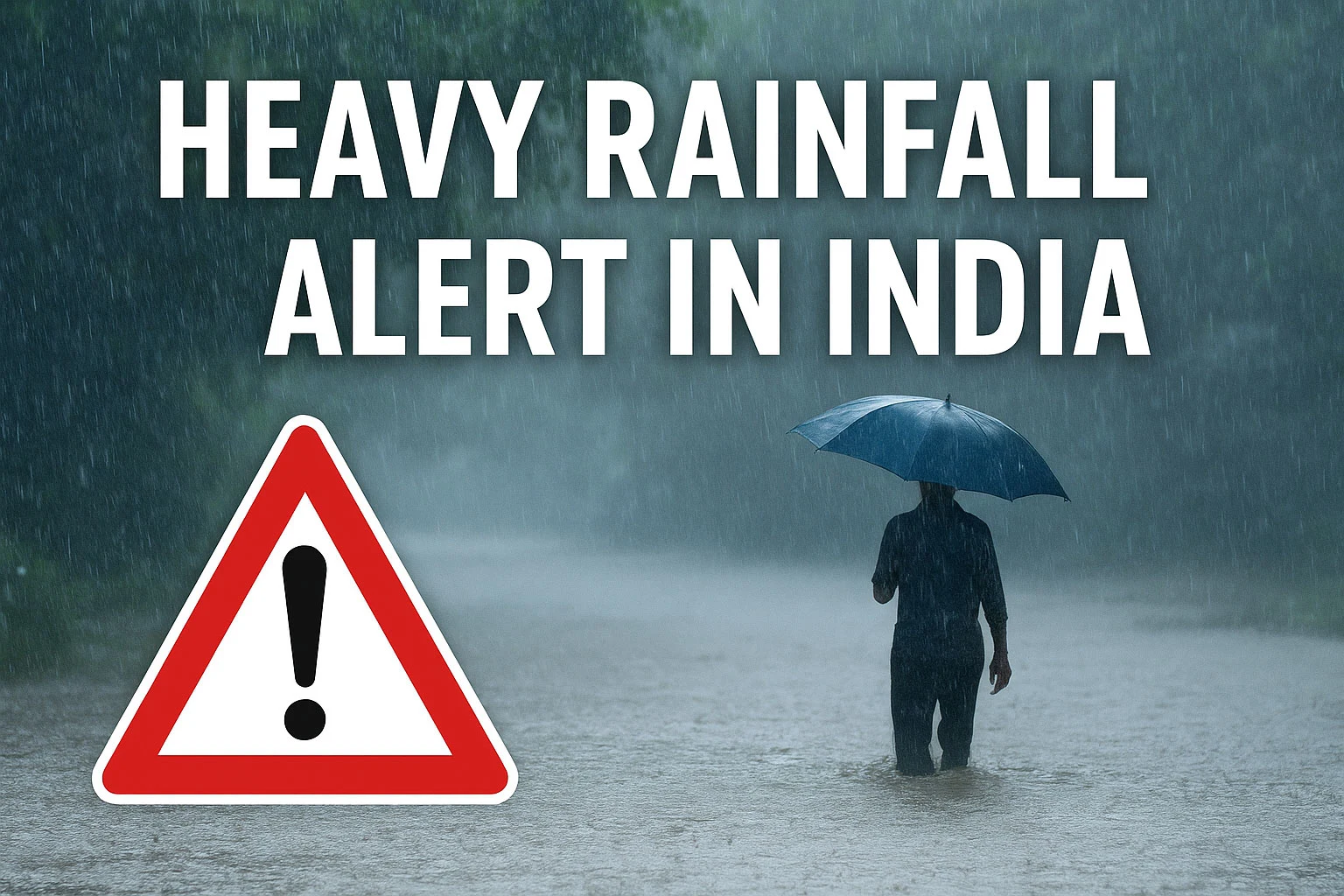
Have you ever woken up to the sound of relentless rain, checked the news, and thought, “Is it safe to step outside today?” That feeling is exactly why when I talk about a heavy rainfall alert, I’m speaking not just as a weather-watcher but as someone who’s lived through leaky ceilings, flooded basements and road closures due to intense downpours. In recent months, the India Meteorological Department (IMD) has issued multiple alerts across the country as monsoon and cyclonic systems combine.
If you’re in India—or travelling here—knowing how to respond during a heavy rainfall alert is crucial. I’ll take you through what these alerts mean, how to interpret them, and practical steps you can take to protect yourself, your family and your property.
What is a “heavy rainfall alert”?
When we see the term heavy rainfall alert, it generally refers to a forecast of very high rainfall in a short span of time, often accompanied by strong winds, lightning or thunder. In India, the IMD issues colour-coded warnings—yellow, orange, red—depending on the severity and expected impact.
For example:
- A red warning means you should take action immediately—move to safe zones, avoid travel.
- An orange or yellow alert means heightened caution—stay updated, avoid risky areas, be prepared for disruptions.
- These alerts may cover flooding risk, water-logging in cities, landslides in hilly terrain.
Why they matter in India right now
- Many Indian cities and states have experienced very heavy rainfall events in 2025—some regions recording more than 500 mm in just a few days.
- Hilly and Himalayan states like Uttarakhand, Himachal Pradesh and Jammu & Kashmir saw a record number of “very heavy to extremely heavy rainfall” spells this monsoon.
- Urban areas are more vulnerable than ever: drainage systems, traffic management and warnings for public transport all get tested when rain-events intensify. The alert system gives us a window to act.
My firsthand experience during a heavy rainfall alert
Last year, I was staying in a city that had just received a red-alert for heavy rainfall. The rain came down for hours, roads were submerged, electricity flickered, commutes became chaotic. I had prepared beforehand—and that made the difference. Here’s what I learned:
- Stay updated: I kept checking the latest bulletin from IMD and local news. I noticed how quickly a yellow alert could escalate to red.
- Plan for disruptions: I moved my vehicle to higher ground, unplugged electronics, kept some essentials in a backpack (torch, power bank, bottled water).
- Know escape/ safe zones: In my building, I had identified the internal stairwell away from windows and checked water-drainage points outside.
- Avoid unnecessary movement: I cancelled a midday commute and waited until the alert was downgraded. Less risk, less stress.
- Check neighbours & vulnerable persons: Knowing that children, seniors, or those with mobility issues can be more at risk during flash flooding helped me support someone else in my community.
These steps are rooted in practical experience—knowing when an alert appears and how it plays out in real life.
Practical steps when a heavy rainfall alert is issued
Here are actionable tips you can use whenever you see an alert in your region:
Before the rain hits
- Check the forecast and alert level (yellow, orange, red) for your district via IMD/MOSDAC websites.
- Clear drains and gutters around your home if possible—clogging increases water-logging risk.
- Keep flashlights, portable powerbanks, bottled water, and basic first-aid handy.
- Secure loose items outdoors (pots, furniture, bikes) because gusty winds often accompany heavy rain.
- Plan alternate routes for travel; many roads may get submerged or shut unexpectedly.
During the alert
- Stay indoors if possible. If you must go out, avoid low-lying areas, underpasses and roads prone to flooding.
- Unplug non-essential electronics—power fluctuations or short-circuits can happen when water seeps in.
- Monitor local news, radio or official channels for evacuation orders or transport disruptions. For example, in Mumbai recent alerts led to train services being cancelled due to waterlogging.
- If you are in hilly terrain, watch out for signs of landslides or soil movement—especially after prolonged rain. Authorities have warned of such risks in states like Uttarakhand.
After the rain has eased
- Be cautious when stepping outside—roads may still be slippery, drains may be blocked, electric poles may have damage.
- Check your property for water intrusion, dampness or structural issues (especially on ground floor).
- Report any public hazards you see (fallen trees, blocked drains, open manholes) to local municipal authorities.
- Review what worked and what didn’t—this helps you prepare better next time a heavy rainfall alert is issued.
Special considerations for India’s varied geography
India is vast and diverse, and a heavy rainfall alert means different things in different regions:
- Urban zones: In cities like Mumbai, waterlogging and disruption to public transport are major concerns. One alert noted over 800 mm of rain in just 5 days in parts of Mumbai, severely straining infrastructure.
- Hilly terrain: Here the risks shift to landslides, flash floods and debris flow. An alert-driven pause in the pilgrimage at Kedarnath is a case in point.
- Coastal & plains: Heavy rain plus high tide or cyclonic winds can worsen the impact. The IMD often issues warnings for regions like Konkan, Goa, Gujarat during monsoon years.
So when you hear “heavy rainfall alert”, think of where you are and what your terrain/building/transport infrastructure is like—and act accordingly.
Why trusting official alerts builds safety
You might wonder, “Is this just alarmism?” Not quite. With increasing intensity of rainfall events (thanks to climate change and altered weather patterns), even short bursts of rain can trigger flooding. The IMD and allied agencies now provide grid-based heavy rainfall alert systems (e.g., via MOSDAC) that update every half hour for localised zones.
Treating an alert seriously doesn’t mean panic—it means respect for nature and turning information into preparedness.
Stay alert, stay ready
When you see a heavy rainfall alert, remember it’s a heads-up from meteorological experts saying: “Conditions may get tough—now’s the time to prepare.” Drawing from my own experience and the expert guidance above:
- Act early: Don’t wait until rain is pouring to scramble.
- Stay informed: Monitor alerts and warnings from trusted sources.
- Be cautious but composed: Preparedness is proactive—not panicky.
- Help those around you: In heavy rainfall situations, community awareness and support often make the difference.
heavy rainfall alert, IMD rainfall alert, red alert for heavy rain, weather forecast India, monsoon rainfall warning, India Meteorological Department, flood safety tips, rainfall alert today, heavy rain warning, IMD weather update, monsoon safety guide, flood preparedness India, extreme weather alert, landslide warning India, heavy rainfall forecast, stay safe during heavy rains, emergency checklist for rain, orange and yellow alert, heavy rain news India, IMD colour-coded warning system